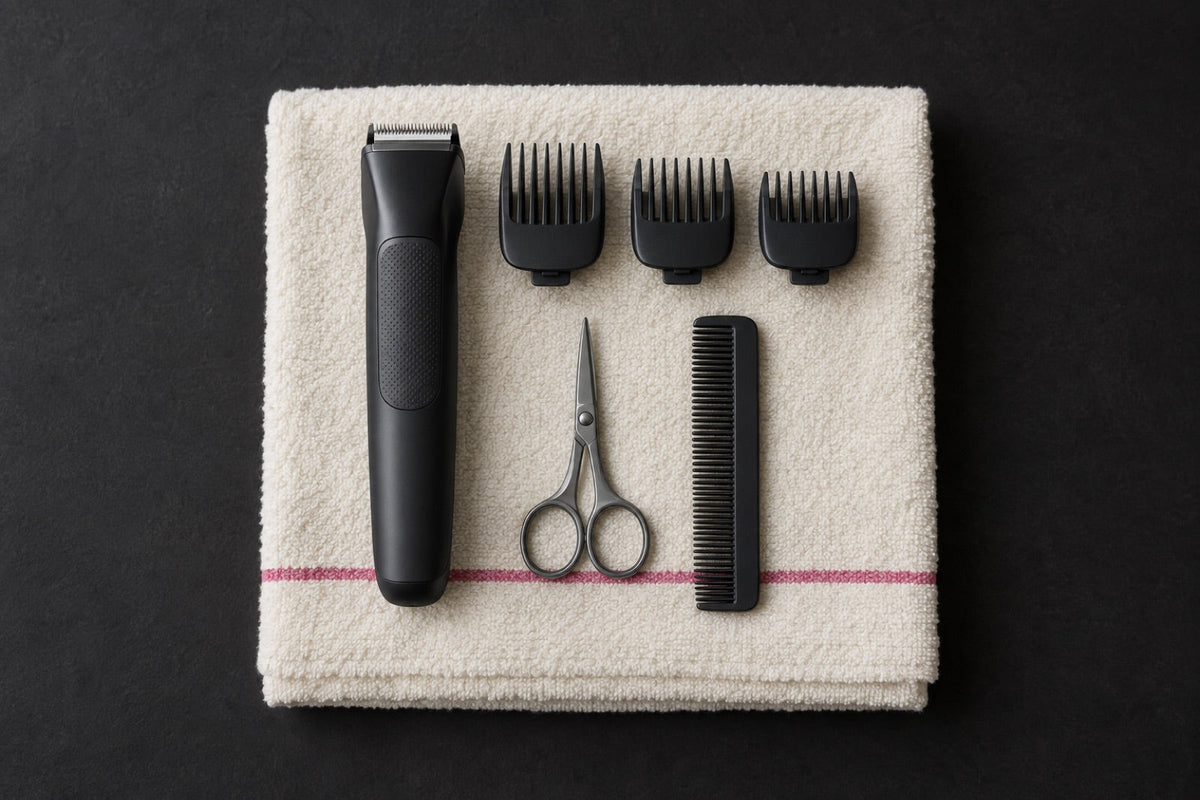
Manscaping is the slightly silly name for a sensible habit: tidying the hair below the belt. Some men do it every week, some never bother, and both are fine. If you do groom, the aim is simple: a neat result, no nicks, and skin that doesn't itch for days afterwards. This guide covers below the belt grooming from start to finish, with a link to a more detailed guide for each part.
What is manscaping?
Manscaping means grooming men's body hair, and most of the time people mean the hair around the groin: the pubic area above the penis, the base of the penis, the scrotum and the inner thighs. It can be as light as a quick tidy with a trimmer or as thorough as shaving everything smooth. The word sometimes stretches to the chest, back and armpits too, but this guide stays below the belt.
Do you need to manscape?
No. Pubic hair is normal, and leaving it alone is a perfectly good choice. Men who manscape usually do it because they like how it looks and feels, or out of plain habit.
If you do groom, how you do it matters more than how often. The NHS says the best way to prevent ingrown hairs is by not shaving, and that leaving at least 1mm of stubble can help reduce them. That's why a trimmer is the easiest place to start: it tidies things up and leaves a little length, so the skin has less to complain about.
What do you need for manscaping?
You don't need a full manscaping kit. For most men, this is enough:
- A body trimmer with clip-on guards. The guard keeps the blades off the skin and leaves the hair at a set length. Keep the trimmer just for this job. Our guide to choosing a pubic hair trimmer explains what to look for.
- Good light and an old towel to stand on, so the clippings don't end up all over the bathroom.
- For a smooth finish, a fresh razor and a shaving gel. If your skin reacts easily, the American Academy of Dermatology suggests one labelled for sensitive skin, and changing the blade (or throwing away a disposable razor) after 5 to 7 shaves.
- A plain, fragrance-free moisturiser for afterwards, in case the skin feels tight.
Leave the aftershave on the shelf: it can burn or sting freshly groomed skin.
Trim, shave, wax or cream: which is best below the belt?
For most men, trimming is the easiest and the kindest to the skin. Shaving and waxing give a smoother finish, with more redness and ingrown hairs along the way. Here's how the four compare at a glance:
- Trimming leaves the hair short with a little length, so irritation is less likely, and you can tidy up whenever you like.
- Shaving is smooth, but DermNet notes that hair grows back above the skin within several hours, or at best a few days. Razor burn and razor bumps are common.
- Waxing pulls the whole hair out, and DermNet says it may take 2 to 3 weeks to regrow. It hurts, the skin stays red and sensitive for a few hours, and ingrown hairs are a known side effect.
- Hair removal cream is one of the alternatives to shaving that the NHS lists if you get ingrown hairs. Read the pack first and follow it exactly, including any areas it says not to use it on.
Our guide to pubic hair removal for men compares all four in detail.
Which areas need the most care?
Below the belt isn't one patch of skin. The pubic area is easy; the scrotum and the creases of the groin ask for a slower hand.
| Easiest way to tidy it | Take extra care | |
|---|---|---|
| Lower stomach, below the navel | A trimmer with a longer guard, blended into the pubic hair | It is easy to overdo: start long and go shorter next time |
| Pubic area, above the penis | A trimmer, at whatever guard length you like | The hair is often curly and can grow in different directions, so go slowly with the direction of growth |
| Base of the penis | A trimmer with a short guard | The skin moves, so use short strokes and a light touch |
| Scrotum (balls) | A trimmer with the guard on, never the bare blade | Hold the skin smooth with your free hand, without pulling it tight |
| Inner thighs and groin creases | A trimmer, or a razor if you want it smooth | Skin rubs on skin here, so go gently and keep the creases dry afterwards |
Whatever the area: dry hair, a guard on, slow strokes. Wait at least 24 hours after grooming before using any leave-on product.
How short should you trim your pubic hair?
As short as you like, but there's a good case for leaving some length. The NHS says leaving at least 1mm of stubble can help reduce ingrown hairs, and that you may be more likely to get them if you have coarse or curly hair, which describes a lot of pubic hair. So even a very short trim doesn't need to be skin-close.
The simple approach is to start with the longest guard on your trimmer and live with it for a few days. Next time, go one guard shorter if you want. Some men keep a longer length above the penis and a shorter one around the scrotum; there's no rule, and nobody is checking.
Should you trim or shave your balls?
Either is fine, and so is leaving the hair alone. A trimmer with the guard on is the gentler option, because the skin of the scrotum is loose and creased, which makes a razor more likely to nick it. If you want it smooth, trim first, then shave slowly in the direction the hair grows. The American Academy of Dermatology says never to pull or stretch the skin while shaving, so hold it smooth rather than tight. Our step-by-step guide to how to shave your balls safely takes you through it.
How to manscape: your first trim, step by step
Set aside ten minutes, somewhere with good light, just before a shower.
- Trim while the hair is dry. Dry hair stands up and cuts evenly, and the shower rinses the clippings away afterwards.
- Start with the longest guard. You can always go shorter next time; you can't put it back.
- Do the pubic area first, going in the direction the hair grows, in slow, short strokes.
- Move to the base of the penis with the same guard or the next one down.
- Take your time around the scrotum. Keep the guard on, hold the skin smooth with your free hand without pulling it tight, and let the trimmer do the work instead of pressing it in.
- Tidy the edges: the creases of the groin and the line where the pubic hair meets your stomach.
- Shower, finish with cool water, and pat dry with a clean, soft towel.
- Clean the trimmer and let it dry completely before you put it away. The American Academy of Dermatology advises storing razors somewhere dry so bacteria don't grow on them, and the same sense applies to a trimmer.
Our simple men's intimate grooming routine puts trimming alongside washing and drying in four easy steps.
How do you shave below the belt without razor burn?
Trim first, shave after a warm shower, and go with the grain. The NHS and the American Academy of Dermatology give the same core advice:
- Wet the skin and hair with warm water first. Straight after a shower is ideal.
- Use a shaving gel or cream.
- Shave in the direction the hair grows, with as few strokes as possible.
- Rinse the razor after every stroke, and don't use a blunt one.
- Hold a cool, wet cloth to the skin afterwards to reduce irritation.
- Don't shave every day, if you can help it.
If the skin complains anyway, our guide to razor burn, razor bumps and shaving rash after manscaping explains what's going on and how to settle it.
How often should you manscape?
There's no right interval: trim whenever the length starts to bother you. The method you choose sets the pace more than anything. Shaved hair is back above the skin within hours to a few days, so a smooth finish needs regular upkeep, while a wax usually lasts a few weeks.
Give shaved skin a break between sessions: the NHS suggests not shaving every day, if possible. And no, shaving won't make the hair grow back thicker. DermNet explains that a cut hair has a blunt tip, so it feels stiffer and looks thicker as it grows out, though it isn't.
What should you do after manscaping?
- Rinse with cool water and pat dry rather than rubbing.
- Moisturise only if you need to, with a thin layer of a plain, fragrance-free moisturiser.
- Skip aftershave and scented products.
- Wear loose, breathable underwear for the rest of the day. Soft, absorbent cotton is a better bet than tight synthetic fabrics.
- Don't scratch as the hair grows back, and don't pick at any bumps.
Then give the skin time. Wait at least 24 hours after shaving, trimming or waxing before using any leave-on product, including ours, and only use it on clean, dry, unbroken skin with no redness, soreness or bumps. Keep it away from the eyes and the opening at the tip of the penis, and stop if irritation develops. Our how to use page has the full directions.
Trying a product for the first time? Patch test it on the inside of your forearm 24 hours before first use. Our guide on how to patch test walks through it.
What are the most common manscaping problems?
Most are minor. The NHS says you usually won't need medical help for ingrown hairs, for example. Here's what tends to crop up:
- Razor burn: red, stinging skin after shaving. Stop shaving the area and keep it cool and dry. Our razor burn guide has the details.
- Razor bumps and ingrown hairs: raised, itchy bumps where a hair has grown back into the skin. The NHS says not to scratch, pick or squeeze them, as this can damage the skin and lead to infection.
- Itching as the hair grows back: DermNet lists itching among the side effects of shaving. Trimming with a guard leaves more length, so it's worth trying if shaving always itches.
- Chafing: red, itchy or sore skin in the creases of the groin, from skin rubbing on skin, made worse by trapped moisture. Keep the area clean and dry and choose loose, absorbent underwear. Our guide to groin chafing covers it properly.
- A reaction to a product: itchy, red or dry patches where a shaving gel or other product touched the skin. Rinse it off with water, and stop using that product.
When should you see a pharmacist or GP?
Speak to a pharmacist if everyday irritation, such as redness, itching or razor burn, doesn't settle within a few days. See a GP, or get help from NHS 111, if you notice signs of infection: redness that spreads, swelling, heat, pus, a high temperature or feeling unwell.
See a GP or an NHS GUM clinic (free, confidential clinics for genital health; you don't usually need a GP referral) if you notice sores, blisters, lumps or a discharge. Bumps that appear when you haven't been grooming aren't razor bumps, so get those checked too. It's routine for them.
More manscaping guides
- How to shave your balls safely: trimming first, the right razor and which direction to go.
- Pubic hair removal for men: trim, shave, wax or cream, compared in depth.
- How to choose a pubic hair trimmer: guards, waterproofing, cleaning and blades.
- Razor burn, bumps and rash after manscaping: how to tell them apart and settle the skin.
- Groin chafing: why it happens and how to make it less likely.
- A simple men's intimate grooming routine: wash, dry, trim, then let the skin settle.
- What is men's intimate skin care?: the basics of washing and drying below the belt.
Common questions
What does manscaping mean?
Manscaping means grooming men's body hair, usually the hair around the pubic area, the base of the penis, the scrotum and the inner thighs. It can be anything from a light trim to shaving smooth.
Is it better to trim or shave pubic hair?
Trimming is kinder to the skin. The NHS says leaving at least 1mm of stubble can help reduce ingrown hairs. Shaving gives a smoother finish but brings more razor burn and razor bumps.
Should I trim my pubic hair wet or dry?
Dry, with a body trimmer and a guard, just before a shower. Dry hair stands up and cuts evenly, and the shower rinses the clippings away.
Does shaving make pubic hair grow back thicker?
No. A cut hair has a blunt tip, so it feels stiffer and looks thicker as it grows out, but it isn't thicker.
How often should men manscape?
Whenever it suits you: there is no right interval. If you shave, the NHS suggests not shaving every day, if possible, so the skin can recover.
Do I need a manscaping kit?
No. For most men a body trimmer with clip-on guards is enough. Add a fresh razor and a shaving gel only if you want a smooth finish.
When can I use an intimate cream or spray after manscaping?
Wait at least 24 hours after shaving, trimming or waxing, and only use it on clean, dry, unbroken skin with no redness, soreness or bumps.
Sources
General information for adults 18+, not medical advice. If a skin problem doesn't settle, or you're worried, speak to a pharmacist or GP.


